How to Meal Prep a Week of Budget-Friendly Lunches for Under $25

Feeding Yourself Real Lunches for Less Than a Fancy Coffee Habit
When I tell people I meal prep five workday lunches for under $25, they usually assume I'm eating ramen and saltines. After twelve years of feeding a family of five on $50 a week, I've learned that cheap doesn't mean compromising on nutrition or flavor. It means shopping smarter, cooking strategically, and understanding which ingredients deliver the most value per dollar.
As a former dental hygienist who left the clinical world to focus on my family's health and budget, I've spent countless hours in my kitchen figuring out how to stretch ingredients without stretching my sanity. The lunch prep system I'm sharing today has saved my family thousands of dollars annually, and it takes me exactly 90 minutes on Sunday afternoon.
Here's the reality: the average American spends $11 per workday on lunch. That's $55 weekly, $220 monthly, and over $2,600 annually. My system costs $5 per week. Over a year, that's a $2,400 difference—enough to fund a family vacation, pay down debt, or build a solid emergency fund.
The Strategic Shopping List
Before heading to the store, I check three things: what's on sale, what I already have, and which proteins offer the best value this week. For this plan, I shop at Aldi or Walmart, though these prices hold fairly steady at most budget grocery chains.
Your $25 Grocery List
- 1 dozen large eggs: $2.49
- 1 can (15 oz) black beans: $0.79
- 1 can (15 oz) chickpeas: $0.79
- 1 bag (2 lbs) dried lentils: $2.29 (you'll use 1 cup)
- 1 bag (32 oz) brown rice: $1.99 (you'll use 2 cups)
- 1 whole chicken (about 5 lbs): $6.49
- 1 bag (16 oz) frozen mixed vegetables: $1.19
- 1 bag (10 lbs) russet potatoes: $3.99
- 1 bunch celery: $1.79
- 1 bag (3 lbs) onions: $1.99
- 1 dozen corn tortillas: $1.29
Total: $24.09 (prices may vary ±$1 depending on region and season)
You'll have leftover rice, lentils, potatoes, onions, and tortillas that roll into next week's prep. This is how you build a sustainable system—by creating overlap between weeks so your grocery bill keeps dropping.
The 90-Minute Sunday Prep Strategy
Efficiency matters when you're cooking for the week. I use my oven, stovetop, and instant pot simultaneously to compress cook time. Here's my exact workflow:
- Start the chicken first (0 minutes): Preheat oven to 425°F. Rub chicken with salt, pepper, and paprika. Place in oven for 75 minutes.
- Begin rice and lentils (5 minutes): Rinse 2 cups brown rice and 1 cup dried lentils. Cook rice in 4 cups water with a pinch of salt. Simmer lentils in 3 cups water with half a diced onion and a bay leaf if you have one.
- Prep vegetables (15 minutes): Dice remaining onions, chop celery, and set aside. These form the flavor base for multiple meals.
- Boil eggs (20 minutes): Cover 8 eggs with cold water, bring to boil, cover, remove from heat, and let sit 12 minutes. Ice bath immediately.
- Prep potatoes (35 minutes): Scrub 5 medium potatoes, prick with fork, microwave 5 minutes each until tender. Alternatively, bake alongside chicken if you have oven space.
- Shred chicken (80 minutes): When chicken reaches 165°F internal temperature, remove from oven. Let rest 10 minutes, then shred all meat, separating into three portions.
- Assemble containers (85 minutes): Portion into five containers using recipes below.
Five Lunches That Actually Keep You Full
These aren't rabbit food portions. Each meal contains 25-35 grams of protein and 400-550 calories. I've calculated macros for my husband, who works construction, and these keep him satisfied until dinner.
Monday: Loaded Baked Potato Bowl
Split one microwaved potato and fluff the insides. Top with ½ cup shredded chicken, 2 tablespoons diced onions, ¼ cup black beans, and a spoonful of salsa if you have it in your pantry. The starch in the potato provides slow-burning energy that outlasts any sandwich.
Tuesday: Lentil and Rice Power Bowls
Combine ¾ cup cooked brown rice, ½ cup cooked lentils, ½ cup frozen mixed vegetables (thawed), and ½ cup shredded chicken. Season with salt, pepper, and a drizzle of oil or hot sauce. Lentils provide 18 grams of protein per cup cooked, plus fiber that keeps blood sugar stable through afternoon meetings.
Wednesday: Egg Salad Stuffed Potatoes
Mash two hard-boiled eggs with a fork. Mix with 1 tablespoon mayonnaise (pantry staple), diced celery, salt, and pepper. Stuff into a split baked potato. This combination delivers complete protein and choline for brain function during that mid-week slump.
Thursday: Chicken and Chickpea Wraps
Warm two corn tortillas. Fill with ½ cup shredded chicken, ¼ cup mashed chickpeas (seasoned with salt and cumin), diced onions, and celery. Wrap tightly in foil. These travel beautifully and taste good at room temperature if you lack microwave access.
Friday: Budget Burrito Bowl
Layer ¾ cup rice, remaining black beans, remaining chickpeas, last of the shredded chicken, and sautéed onions. Top with hot sauce or salsa. This bowl uses up every remaining ingredient so nothing goes to waste.
Storage and Food Safety Essentials
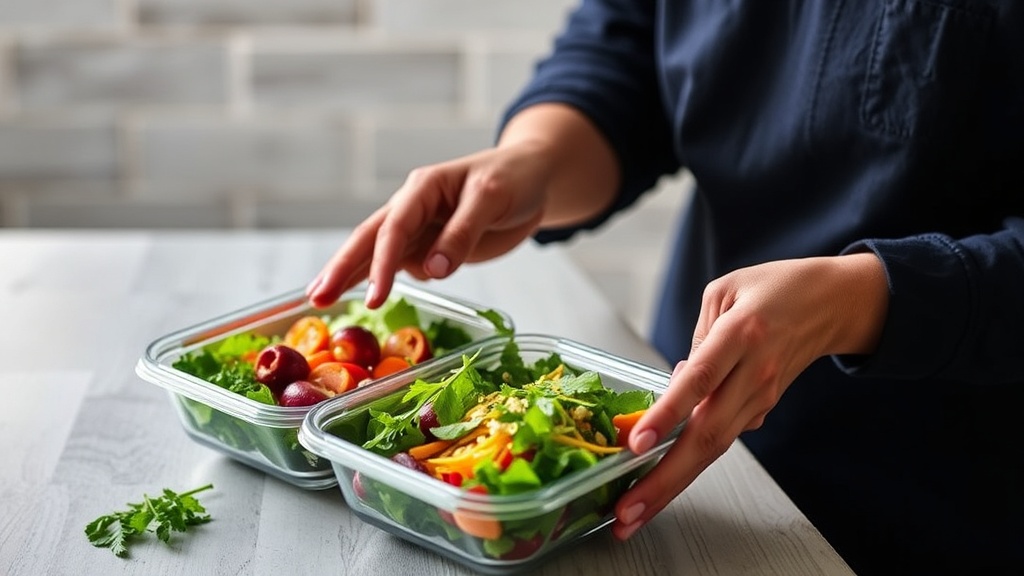
After twelve years of weekly prep, I've learned which containers work and which ones crack after three washes. I use glass meal prep containers with locking lids—an initial investment of $30 that has lasted five years. If you're starting out, any containers work; prioritize proper cooling and refrigeration.
Critical storage rules:
- Cool food completely before sealing containers (condensation breeds bacteria)
- Refrigerate within two hours of cooking
- Store at 40°F or below
- Consume within 5 days or freeze for up to 3 months
- When reheating, internal temperature should reach 165°F
From my dental background, I'm particular about food safety. Bacterial growth in improperly stored prepared foods isn't just uncomfortable—it can cause serious illness that costs far more than the $25 you saved meal prepping.
Customization Without Blowing the Budget
This base template adapts to dietary needs and preferences without requiring expensive specialty ingredients:
Vegetarian version: Skip the chicken, double the eggs and beans. Add an extra can of beans ($0.79) for additional protein. Your total becomes $18.59.
Gluten-free: This entire plan is naturally gluten-free. Verify that your spices and any condiments are certified gluten-free if you have celiac disease.
Higher protein needs: Add two additional eggs ($0.42) and portion them across meals. Still under $25.
Flavor variations: Keep a stocked pantry with cumin, paprika, garlic powder, Italian seasoning, and hot sauce. These four spices transform the same ingredients into Mexican, Mediterranean, Indian, and American comfort food profiles throughout the week.
The Real Cost Breakdown
Here's where most budget meal plans get deceptive. They quote ingredient costs but ignore the reality that you'll have leftovers. My calculation accounts for what you actually use versus what you purchase:
"The goal isn't just eating cheap for one week—it's building a sustainable system where your grocery bill decreases over time as you stock your pantry strategically."
Actual used ingredients:
- Eggs (8 of 12): $1.66
- Black beans (full can): $0.79
- Chickpeas (full can): $0.79
- Lentils (1 cup dry): $0.45
- Brown rice (2 cups dry): $0.50
- Chicken (5 lbs, using all meat): $6.49
- Frozen vegetables (full bag): $1.19
- Potatoes (5 of ~15): $1.33
- Celery (half bunch): $0.90
- Onions (2 of ~10): $0.40
- Tortillas (4 of 12): $0.43
Total actual cost: $14.93
Even if you have zero pantry staples and must buy everything listed, you're at $24.09 with significant leftovers. After three weeks of this system, your pantry contains rice, lentils, onions, and tortillas that reduce future grocery bills to $15-18 per week.
Making It Work With a Busy Schedule
I understand the Sunday prep resistance. When I was working full-time as a hygienist with three kids under six, the last thing I wanted was kitchen time. But spending 90 minutes on Sunday saved me 5 hours during the week. No cooking, no cleaning, no decision fatigue about what to eat.
If Sunday doesn't work, split the prep: cook proteins and grains on Sunday, assemble containers Wednesday evening. The system flexes to fit your life.
The psychological benefit surprised me most. Knowing my lunch was handled eliminated the 11 AM stress of figuring out food, prevented impulse drive-through stops, and gave me a small daily win that built confidence in other financial decisions.
Start Where You Are
You don't need perfect containers, a stocked spice rack, or professional knife skills. You need one Sunday, $25, and the willingness to try. My first meal prep attempt was a disaster—I undercooked rice, oversalted beans, and packed portions too small. By week three, I had a system that ran on autopilot.
Pick one recipe from this plan and make it tomorrow. Build from there. Your wallet, your health, and your future self will thank you for choosing real food over convenience markup.
Steps
- 1
Plan Your Menu and Create a Shopping List
- 2
Shop Smart Using Sales and Store Brands
- 3
Batch Cook Proteins, Grains, and Vegetables